
Barbering
Earn your Colorado Barber License in three semesters. Professional skills, hands-on training, real clients.

About the Program
Master the Art of Barbering
Trinidad State’s Barbering Program gives you the skills, clinical hours, and professional knowledge to pass the Colorado State Barber Licensure exam and launch a career in a growing industry. You’ll learn from experienced instructors in a real-world shop environment—working with actual clients from day one.
Shaving & Honing
Traditional straight-razor technique, stropping, and modern precision shaving methods.
Hair & Scalp Care
Diagnosing and treating scalp conditions, thinning, and providing professional client consultations.
Cutting & Styling
Classic and contemporary cuts, tapers, fades, and styling techniques across diverse hair types.
Color & Chemicals
Hair coloring, chemical relaxers, and permanent wave treatments performed to industry standards.
Skin Care & Facial Massage
Facial treatment fundamentals, massage techniques, and skin care basics as part of full-service barbering.
Laws & Sanitation
Colorado regulations, professional ethics, infection control, and maintaining a safe, compliant shop.
Program Cost
Where You Can Study
This program is offered at the following TSC campus locations.
Barbering Certificate
Each certificate is a standalone credential. Click any certificate to see the full course list.
Certificate Name
Brief description of what is included
Semester One (17 credits)
- BAR 1041 – Intermediate Permanent Waves/Chemical Relaxers (3 credits)
- COS 1050 – Laws, Rules, and Regulations (1 credit)
- COS 1060 – Introduction to Infection Control and Prevention (2 credits)
- COS 1061 – Intermediate I: Infection Control and Prevention (1 credit)
- COS 2050 – Business Management /Personal Skills/Ethics (1 credit)
- COS 2060 – Intermediate II: Infection Control and Prevention (2 credits)
- COS 2061 – Advanced Infection Control and Prevention (1 credit)
- COS 2088 – Practicum (3 credits)
- EST 1010 – Introduction to Skin Care (3 credits)
Semester Two (17 credits)
- BAR 1007 – Introduction to Shaving, Honing, & Stropping (1 credit)
- BAR 1008 – Intermediate Shaving, Honing & Stropping (1 credit)
- BAR 2007 – Advanced Shaving, Honing, & Stropping (1 credit)
- COS 1003 – Introduction to Hair and Scalp (1 credit)
- COS 1020 – Introduction to Hair Cutting (2 credits)
- COS 1021 – Intermediate I: Hair Cutting (2 credits)
- COS 1030 – Introduction to Hair Styling (2 credits)
- COS 1031 – Intermediate I: Hair Styling (2 credits)
- COS 1040 – Introduction to Chemical Texture (1 credit)
- COS 1041 – Intermediate I: Chemical Texture (1 credit)
- COS 2003 – Intermediate I: Hair and Scalp (1 credit)
- COS 2020 – Intermediate II: Hair Cutting (2 credits)
Semester Three (16 credits)
- BAR 2041 – Advanced Permanent Waves/Chemical Relaxers (2 credits)
- COS 1010 – Introduction to Hair Coloring (2 credits)
- COS 1011 – Intermediate I: Haircoloring (2 credits)
- COS 2010 – Intermediate II: Haircoloring (2 credits)
- COS 2011 – Advanced Hair Coloring (2 credits)
- COS 2021 – Advanced Hair Cutting (2 credits)
- COS 2030 – Intermediate II: Hair Styling (2 credits)
- COS 2031 – Advanced Hair Styling (1 credit)
- COS 2040 – Intermediate II: Chemical Texture (1 credit)
Where You'll Go
Real job market data for the careers our graduates pursue, powered by Lightcast.
Licensure Exam Results
Pass Rates (2019–2024)
Results are reported for the Colorado Department of Regulatory Agencies barber and cosmetology licensure exams. Data reflects Valley Campus (Alamosa) outcomes for all programs in the department.
92.86%
Barbering
Practical Exam
33%
Barbering
Written Exam
80.77%
Cosmetology
Practical Exam
34.15%
Cosmetology
Written Exam
94.87%
Esthetician
Practical Exam
69.77%
Esthetician
Written Exam
Exam administered by the Colorado Department of Regulatory Agencies. All data reflects Valley Campus outcomes only. Trinidad Campus barbering data is not available for this period (N/A).
Professional Licensure Disclosure
If you are considering an academic program that leads to a professional license in the state where you plan to live and work after graduating, it is highly recommended that you first seek guidance from the appropriate licensing agency in that state before beginning the academic program at Trinidad State College. It is the student’s responsibility to contact the appropriate licensing board to confirm whether a TSC program will meet the requirements for licensure in that state.
In compliance with the U.S. Department of Education and the National Council for State Authorization Reciprocity Agreement (NC-SARA), Trinidad State College provides information pertaining to professional licensure and certification in correlation with programs offered at TSC that may lead to state licensure.
The State Authorization Reciprocity Agreement (SARA) is an agreement among member states, districts, and territories that establishes comparable national standards for interstate offering of postsecondary courses. Students are advised to review program licensure information before beginning a program at TSC that leads to professional licensure with the intent to be licensed outside of Colorado. While TSC endeavors to ensure this information is up to date, requirements can change at any time.
Review licensure information for related programs: Cosmetology • Emergency Medical Services • Law Enforcement Academy • Nurse Aide • Nursing
For additional assistance pertaining to professional licensing compliance, contact Dr. Lynette Bates, Vice President for Academic Affairs: lynette.bates@trinidadstate.edu.
Contact Us
Have questions about this program? Reach out to a faculty or staff member.

- TitleFaculty
- DepartmentCosmetology
- LocationAlamosa, Colorado • Main
- Emailsarah.sandoval@trinidadstate.edu
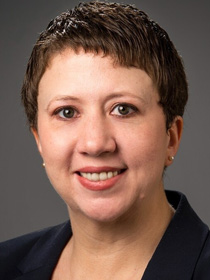
- TitleDean of Instruction
- DepartmentBUS, CIS, ECE
- LocationAlamosa, Colorado • 112 Main
- Emailemily.hammer@trinidadstate.edu